• Halloween is coming! To celebrate the occasion, we dusted off a couple of old skins, and even created a brand new one (Pixel).
    To get into the festive spirit, install the Skins extension.
  • The new Python extension is now available. It allows customers to deploy and manage WSGI-based Python applications on their websites directly from Plesk.
  • The Plesk Mobile apps for iOS and Android and the Plesk Mobile Center extension have been deprecated, and are no longer available for new installations. In Plesk Obsidian 18.0.84, the Plesk Mobile Center extension will be removed from servers during the upgrade, and the Plesk Mobile apps will lose their server management features.
  • The Social Login extension has been deprecated and will be removed in Plesk Obsidian 18.0.84. After that, it will no longer be possible to log in to Plesk with a Google, Facebook, GitHub account, or with a passkey. Plesk usernames and passwords, as well as logging in with a WebPros Account, are not affected.

Installing PHP-FPM help please

mavera2

Basic Pleskian
I use Plesk 11.5 and PHP 5.4.18.
I want to use opcache like APC, XCache but it seems like these opcache engines are not compatible with fastcgi.
I read that if I enable php-fpm, it manages the workers and opcache works well.

How can I install php-fpm ?
How can I enable php-fpm ?

I'm cautious and I'm afraid to break my webserver, apache etc.
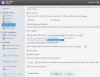
In my Plesk settings there exists cgi, fastcgi and apache settings.
Is php-fpm will be added to these settings ?
fast.jpg

I want to be sure tha teverything will be worked well, if not works, I would easily go back to current configuration.
Thank you.
 
Also I want to mention that 99% of my files are php files. I use a CDN for serving static files. So serving static files with nginx won't give me more performance.

I'm interested in using XCache with FastCGI.
 
Basically, just as the documentation says, you first need to install nginx and PHP-FPM support (the latter usually requires certain third-party repository enabled if you don't have suitable php-fpm package in your OS vendor repos). Ensure both services are enabled/started in services management page. Then go to web server settings for a given domain and enable processing "PHP by nginx". You don't need to serve static files in any specific way, so I suggest using default settings there.

Using PHP-FPM with Apache on Plesk is not supported natively. Hacking it together could get cumbersome, so I'd use nginx+php-fpm option if it suits your needs (you might have some troubles with rewrites since the mechanism differs, but it's all solvable).
 
Basically, just as the documentation says, you first need to install nginx and PHP-FPM support (the latter usually requires certain third-party repository enabled if you don't have suitable php-fpm package in your OS vendor repos). Ensure both services are enabled/started in services management page. Then go to web server settings for a given domain and enable processing "PHP by nginx". You don't need to serve static files in any specific way, so I suggest using default settings there.

Using PHP-FPM with Apache on Plesk is not supported natively. Hacking it together could get cumbersome, so I'd use nginx+php-fpm option if it suits your needs (you might have some troubles with rewrites since the mechanism differs, but it's all solvable).

Nikolay Thank you for detailed information.
I'm not good at server admining so I'm afraid to switch to nginx, I prefer to stay with Apache.
I also don't want to hack Plesk for Apache+PHP-FPM.

I will look for another solution where Opcode cache and mod_fcgid works well :(
 
Back
Top