We found a deterministic trigger and the underlying mechanism, so you don't have to keep asking each user to install a beta build on CloudLinux to reproduce it.
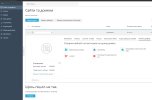
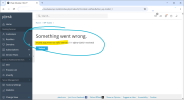
This is not about a specific WP build, the OS, or the platform. The WP Toolkit parses version strings with a strict semver parser, and it does not tolerate an empty ('') or a non-semver value. Because the parse error is not caught per record, a single bad record aborts the entire instance list / overview — which is why the whole Toolkit screen dies instead of just showing one problematic row.
There are two reproducible sources:
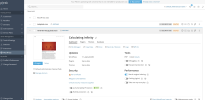
1. Empty version ('') — any WP component whose metadata carries no version. The most common and, in practice, nearly universal one on our fleet: drop-ins, e.g. wp-content/maintenance.php when maintenance mode is active. By WordPress convention, drop-ins have no Version: header line, so the Toolkit reads '' and the semver parse throws. Maintenance mode is enabled on almost every site at some point, which is why this is so widespread — and why it also matches the original reporter's case (a WP listed before an auto-install finished, or one deleted but not detached; in both cases there is no clean version string).
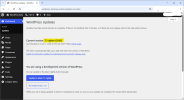
2. Non-semver values — e.g. a WordPress beta 7.1-alpha-62492, or a 4-segment plugin/theme version like 2014.1231.2016.0 (this matches the report from
@Alexander Girod).
Simplest reproduction: put any single WP install into maintenance mode (drop-in present), then open the WP Toolkit overview. That reproduces it without a beta build, without CloudLinux, and without any edge-case host configuration.
I verified on our server (Plesk Obsidian 18.0.82.4, dozens of WP sites) that all WP core versions are valid semver and all theme/plugin versions (authoritative wp-cli output) are valid too — so no site, theme or plugin edit can fix this. The fix has to be on the Toolkit side: tolerate empty/non-semver versions (treat them as unknown, skip them) and catch the parse exception per component instead of letting one bad record fail the whole listing.

 Facebook
 Twitter