Question Many internal requests on image-files

pwouda

New Pleskian
Server operating system version
CentOS Linux 7.9.2009 (Core)
Plesk version and microupdate number
Plesk Obsidian v18.0.70_build1800250617.10 os_CentOS 7
Hi there,

I have about 80 Joomla-websites on my PLESK-server. On many of them (maybe all) there are a lot of requests (5 to 200 per minute) by the servers ip-addres on image-files.

I don't know why, and I guess it will overload the server for no reason.

- where do these requests come from?
- how can I stop them?

Kind regards,
Peter
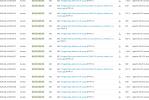
 

Attachments

  • Schermafbeelding 2025-06-24 090550.png
    Schermafbeelding 2025-06-24 090550.png
    178.2 KB · Views: 14
Hi @pwouda

A similar situation occurs with me via Cloudflare IP addresses. I think there is an indexing and when I investigated the reason, I could not figure it out yet.

The incoming requests seem to be made by bots. Although it increases the server load, bots come at a certain time and then stop indexing.

However, if you want to block it completely, I have enabled the "Under The Attack" mode via Cloudflare. Wait a few days, when I disabled the mode, the bots started scanning again.

When I query the IP address, I get the following result: ARIN Whois/RDAP

Kind regards
 
Hi @pwouda

A similar situation occurs with me via Cloudflare IP addresses. I think there is an indexing and when I investigated the reason, I could not figure it out yet.

The incoming requests seem to be made by bots. Although it increases the server load, bots come at a certain time and then stop indexing.

However, if you want to block it completely, I have enabled the "Under The Attack" mode via Cloudflare. Wait a few days, when I disabled the mode, the bots started scanning again.

When I query the IP address, I get the following result: ARIN Whois/RDAP

Kind regards
Hi Ahmet,

Thanks for the reply. The IP-addres is the address of my own server. That is the weird thing about it.

Kind regards,
Peter
 
Hi there,

After some research I found out that the request from my own server was caused by the <meta property="og:image" content="https://xxxxxxx"/> and / or the <meta name="twitter:image" content="https://xxxxxx"/> tag on the website.
That can do no harm I guess, but I am interested in the process that makes this request. Anyone?

Kind regards,
Peter
 
Back
Top