Dmytro
Regular Pleskian
- Server operating system version
- CloudLinux 8.10
- Plesk version and microupdate number
- Plesk Obsidian 18.0.77 #2
/var/log/plesk/panel.log.I sent log to you through DMHi, @Dmytro . Please temporarily enable debug mode in Plesk, reproduce the issue one again and double-check what has been logged to/var/log/plesk/panel.log.
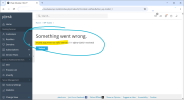
Invalid argument not valid ('7.1-alpha-62492' received)

tail -n 100 /var/log/plesk/panel.log

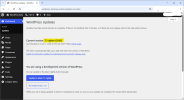
WordPress Beta and the specific version number 7.1-alpha-62492 is a clear indicator that the WP Toolkit has an issue with non-semver version numbers.

@Sebahat.hadzhi regarding the beta version you are right, the exact version number isn't important. On my side I hade a different version number before, but I was curious if the beta build at that time was the culprit and clicked on update and got to the version in my screenshot.Hi, @Alexander Girod . I am unable to replicate the behavior with a 7.1-alpha-62496 build. It's not the exact same built, but I would assume it should've triggered the error nevetheless:
View attachment 29501
If the whole WP Toolkit become unresponsive this is something our team would definitely want to look through. Could you please provide more detailed steps to reproduce? As in, did you directly install the alpha build and scanned for the instance through WP Toolkit or did you update an existing instance already present in WP Toolkit? What actions were performed tehreafter? Thanks in advance.
Invalid argument not valid semver error. If that solution doesn't help sorting it out, please double-check /var/log/plesk/panel.log for extension/wp-toolkit related errors.wp-content/maintenance.php with some sample content (with no Version: header line). Removed the WP instance and re-scanned through WP Toolkit. I am afraid, the issue still does not reproduce on my end. In case I am missing something, would you please share the exact steps you performed on your test environment to successfully reproduce the behavior? Thanks in advance for your cooperation.Thank you for your reply, and for taking the time to attempt a reproduction. I would like to clarify two points, because I believe there is a misunderstanding on both — one about the environment, and one about the actual trigger.Hi, @Merlin1220 . Thank you for your insights. I attempted to replicate the issue again by placing a WordPress instance in maintenance mode through the wp-cli and then manually addingwp-content/maintenance.phpwith some sample content (with no Version: header line). Removed the WP instance and re-scanned through WP Toolkit. I am afraid, the issue still does not reproduce on my end. In case I am missing something, would you please share the exact steps you performed on your test environment to successfully reproduce the behavior? Thanks in advance for your cooperation.
talk.plesk.com
[debug]
enabled = true
[log]
filter.priority = 7
tail -n 200 /var/log/plesk/panel.log
sqlite3 -readonly /usr/local/psa/var/modules/wp-toolkit/wp-toolkit.sqlite3 ".schema instanceProperties"
sqlite3 -readonly -header /usr/local/psa/var/modules/wp-toolkit/wp-toolkit.sqlite3 "SELECT * FROM instanceProperties WHERE LOWER(name) LIKE '%version%' LIMIT 100;"
wp-content/maintenance.php (Plesk-generated, no Version: header), all affected.maintenance.php, but there is no code reference, log or DB row for it, and Sebahat's test in #11 didn't reproduce it. (She used a manually created file; enabling maintenance mode via WP Toolkit itself would be the closer test.) Other candidates for an empty value: other drop-ins (object-cache.php, advanced-cache.php), mu-plugins, a component without a version header, or an empty value in the WP Toolkit DB.wp plugin list --status=dropin --fields=name,version,status --format=json --allow-root --path=/var/www/vhosts/<domain>/httpdocs
wp-content/maintenance.php aside and reload that domain's WordPress tab. If the error disappears there, the theory is confirmed. If it stays, it's refuted. Moving the file back undoes it.maintenance.php yet. And the early reports are on WP Toolkit 6.10.1, this one on 6.11.8, so we may be looking at more than one cause behind the same message.Hi,
Thanks for the two follow-ups. We enabled the Plesk debug mode and triggered the WP Toolkit overview,
then did the read-only `instance info` and DB checks.
Here is what we found. Short version: you were right to be sceptical about the maintenance.php theory — the real source is an empty/`''` value
in the **WP Toolkit DB**, and we now have a concrete, reproducible lead.
## What the debug run showed
With `[debug] enabled = true` + `[log] filter.priority = 7` we restarted the panel engine and opened the WP Toolkit overview (`/modules/wp-toolkit/index.php/index/list`).
The `/installations` request returns HTTP 200, but the **UI still renders empty and shows `Invalid argument not valid semver ('' received)`**.
Importantly, **no semver/stacktrace line is written to `/var/log/plesk/panel.log`** even with debug on — the exception is caught upstream and only shown in the UI.
So a server-side trace is not available from that log, which is why we pivot to the read-only evidence below.
What **is** logged (new, and useful):
```
WARN [extension/wp-toolkit] Instance attribute 'version' has unexpected value "528"
WARN [extension/wp-toolkit] Instance attribute 'version' has unexpected value "421"
WARN [extension/wp-toolkit] Instance attribute 'version' has unexpected value "686"
WARN [extension/wp-toolkit] Instance attribute 'version' has unexpected value "441"
```
These fire when WP Toolkit runs `instance info` for a small set of installations, and the value changes on **every run** (we also saw `369`, `654`, `278`, `508`, `941`, `747`, `728`, `108`).
## The concrete DB / API finding
Read-only, via the WP Toolkit REST API (`GET /api/modules/wp-toolkit/v1/installations`) and the SQLite `instanceProperties` table:
- **54 installations total**, and exactly **4** have an empty `version` (''):
- #8 wasser-tiger.at
- #14 ntgb.klauda.at
- #71 regold.at
- #68 test.bsc-stockerau.at (a "generic server"/remote-agent instance, `domainId=0` — not hosted on this Plesk server)
- All other installations report `version = 7.1.5`.
## What the `instance info` command itself returns
Running the exact WP Toolkit `instance info` command against #71 (regold.at), #8 (wasser-tiger.at), #14 (ntgb.klauda.at) produces a **garbage, non-deterministic** value for the version field (421 / 686 / 441), while the actual WordPress core version in the site's `wp-includes/version.php` is the **valid semver `7.1.5`**.
So the sequence is:
1. WP Toolkit runs `instance info` for these 4 installations.
2. It reads a **non-semver, unstable value** as the version.
3. That value can't be stored/validated → WP Toolkit logs `unexpected value "..."` and stores `version = ''`.
4. The global overview (all 54) semver-parses that `''` → `Invalid argument not valid semver ('' received)`.
## In response to your specific points
- **Around the versions (4.7, 2.4.15.1, etc.):** agreed. They aren't strict semver, but they are not the trigger here — the error quotes `''`, a truly empty value, and the DB confirms `''` exactly for those 4 installations.
- **`maintenance.php`:** you were correct to question it. All 50 web instances carry the Plesk drop-in (hence the correlation), but `index/plugins` and `index/themes` render fine for the same instances — only the main overview (which surfaces the WP core `version`) fails. The drop-in is not the source.
- **`object-cache.php` / `advanced-cache.php` / mu-plugins:** we scanned every instance's drop-in view via WP-CLI — the only drop-in present anywhere is `maintenance.php`. No object-cache/advanced-cache drop-ins, no mu-plugin version issue found.
- **Your "empty value in the WP Toolkit DB" hypothesis:** **confirmed**, with a concrete lead. The empty `version` is stored in `instanceProperties` for exactly #8 / #14 / #71 / #68.
## Rebuttal of the DB-reset shortcuts (for the record)
We also considered the two workarounds actively:
- Writing `7.1.5` into those 4 `version` rows: it would hide the symptom briefly, but `version` is a cache that the next `instance info` rescan overwrites with the same garbage value → the error returns. It's also a write to the live production Plesk DB, so we did **not** do it.
- Deleting/rebuilding the whole `wp-toolkit.sqlite3`: not recommended — it would lose WP Toolkit state (labels, security status, vulnerability history, update tasks) and regenerates the same bad value on rescan.
## What would help the Plesk team most
A stack trace from inside the WP Toolkit `instance info` handler is still the cleanest fix for you, but our read-only evidence pinpoints the mechanism. The variable, non-semver value read back for these 4 installations (versus the correct `7.1.5` in `version.php`) strongly suggests the `instance info` output parser is mis-reading the version field for these installs — either an offset/parse issue in the CSV-ish output or a per-installation condition. If you have a way to get the raw `instance info` JSON from the handler for #71, that would confirm it immediately.
If it helps the wider case: the early reports were on WP Toolkit 6.10.1 and this one is 6.11.8, so there may be more than one path to the same message — but on this server the empty DB `version` for those 4 installations is the concrete, reproducible trigger.
Server: klauda.at, Plesk Obsidian 18.0.82.4, WP Toolkit 6.11.8.
For the moderator: we have kept the panel debug mode **off** (we disabled it again after capturing the evidence, and the services have been restarted back to normal).
---
**Question for you (how to escalate to Plesk support):** You mentioned that "a support ticket with server access will probably get you an answer faster than the forum." Since this is a production server and the bug is clearly Plesk-side, we'd like to do exactly that — could you tell us the best way to proceed? Specifically:
1. What is the recommended channel to open a Plesk support ticket for this (the Plesk Support portal / `plesk` panel contact route / any internal escalation)?
2. You said "with server access" — do you need us to provide any access credentials or just submit the evidence + this thread? We are careful about handing over credentials and would prefer to give you everything read-only (the reproducible `instance info` output, the 4 installation IDs/URLs, the empty-`version` DB state) up front, plus the Plesk KB links that already cover part of this.
3. Is there a specific internal item/reference (e.g. the EXTWPTOOLK-9313-style tracking or a feature request ID) we should cite, given this is likely related to the stricter semver parsing added around WP Toolkit 6.10/6.11?
We'd be happy to fill out whatever the support form needs and attach the evidence package above. Many thanks.
version values fit the message ('' received) and the fact that one bad record breaks the whole overview.'' stored" is inferred from the warnings, not shown. You ran instance info yourselves, so please post the raw output for one affected instance (e.g. #71, domain and paths anonymised) in a CODE block, since the forum doesn't render Markdown. The varying three-digit numbers look more like something else in the output (a counter, size or duration?) than a version fragment, and the raw output would show whether extra text (e.g. PHP notices) is mixed in.domainId=0) and wasn't part of the instance info comparison. It may be a different path to the same ''.hide-wordpress-version is active on the affected installations (#8, #14, #71 and, on a remote agent, #68). It registers on init and overwrites the global $wp_version with a random integer:// wp-content/plugins/hide-wordpress-version/hide-wordpress-version.php
Line 12: $GLOBALS['wp_version'] = rand( 99, 999 );
Line 84: add_action( 'init', array('HideWordPressVersion','wp_version'), 1 );
instance info reads the version from that global:// .../vendor/wp-cli/vendor/plesk/wp-cli-toolkit-command/src/Instance_Command.php
Line 102: global $wp_version;
Line 110: $info['version'] = $wp_version;
instance info returns a random integer (e.g. 510 / 843 / 940 — it changes every run, because it is rand(99,999)), not 7.1.5 and not empty. Because that value is not valid semver, WP Toolkit logs WARN ... 'version' has unexpected value "843" and stores version = ''; the global overview then semver-parses that '' and throws Invalid argument not valid semver ('' received).instance info output for one affected instance (#71) — domain/paths/email anonymised (command as Plesk runs it, as the site user):[command]
/opt/plesk/php/8.4/bin/php .../wpt-wp-cli.php --path=<DOCROOT> --no-color instance info
[output]
Field Value
name <SITENAME>
url https://<DOMAIN>
language de_DE
admin_email <ADMIN_EMAIL>
last_admin_login_date null
blog_public 1
version 510
update_version null
update_version_minor null
plugins [{ ... valid JSON, no PHP notices ... }]
themes [{ ... valid JSON, no PHP notices ... }]
510 really is in the version field — there is no parsing shift and no stray PHP notice / extra text mixed in. (I list 510 only as an example; it varies each run, e.g. also 421, 686, 843, 940 — that is the rand(99,999).)wp core version on the same instance returns 7.1.5 (it reads wp-includes/version.php directly), while wp eval 'global $wp_version; echo $wp_version;' and get_bloginfo('version') return the random number — confirming the corruption happens at the $wp_version global, not in the file.hide-wordpress-version plugin is active. With --skip-plugins=hide-wordpress-version, $wp_version returns 7.1.5; with any other single plugin skipped it still returns the random value. The other ~50 installations report 7.1.5 and do not have this plugin. #68 (test.bsc-stockerau.at) is a remote agent instance (domainId=0) on another server; it had the same plugin and is now fixed too.hide-wordpress-version on #8, #14, #71 (as the site user, via WP-CLI) and on the remote instances (#68/#69) — verified $wp_version/get_bloginfo('version') now return 7.1.5.plesk ext wp-toolkit --clear-cache, and -remote-agent-instance for #68).version = 7.1.5, zero empty values, and the global overview renders again.version is empty or not valid semver (a third-party plugin, a hand-edited value, a future WP build, etc.):version takes down the entire global overview (Invalid argument not valid semver ('') received) instead of just being skipped or sanitised.version (treat it as unknown / show the instance without a version badge, or fall back to the value from wp-includes/version.php) rather than aborting the whole list? That would prevent this class of failure regardless of how a bad value gets in. We found the specific trigger here (plugin), but the parser hardening is independent and would have limited the blast radius to one instance.wp core version and instance info is exactly what you asked us to post, and it is what pinned down the plugin.